

When a frying pan has served its purpose — after years of daily cooking, heating, and cleaning — many people ask the same question: are fry pans recyclable? The answer depends on the pan’s material, construction, and coating. While some frying pans can be easily recycled, others require extra steps or specific facilities.
In this article, we’ll explore everything you need to know about recycling fry pans, how materials like stainless steel and aluminum differ in recyclability, and why choosing a WOHAO Stainless Steel Frying Pan is not only better for your cooking experience but also for the environment.
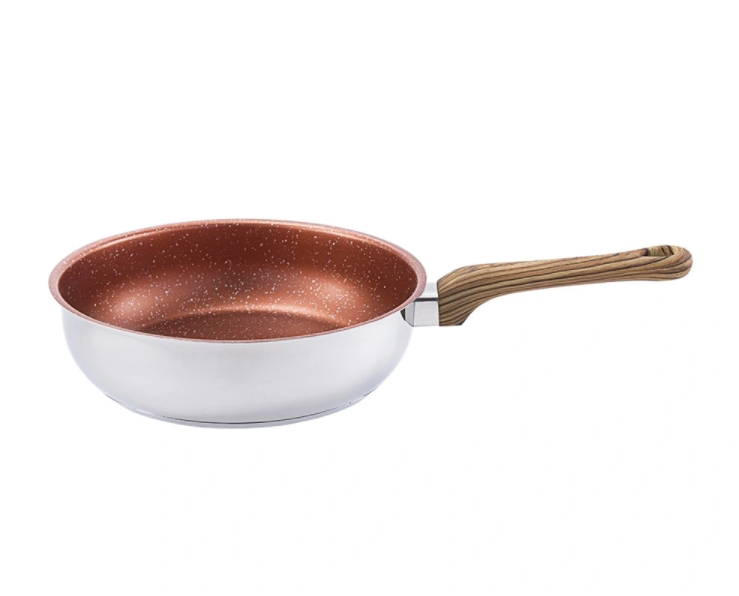
1. Understanding the Materials: What Fry Pans Are Made Of
To determine whether a frying pan can be recycled, it’s essential to first understand what it’s made of. Different metals, coatings, and handles affect how recycling facilities process cookware.
1.1 Common Materials in Fry Pans
| Material | Description | Recyclability | Notes |
|---|---|---|---|
| Stainless Steel | Highly durable metal that resists rust, corrosion, and stains. | Excellent — fully recyclable in metal recycling facilities. | WOHAO uses premium food-grade stainless steel with a recyclable base. |
| Aluminum | Lightweight and conducts heat quickly. | Good — recyclable if free of nonstick coating. | Often used in mid-range cookware or layered with stainless steel. |
| Cast Iron | Very strong, heavy, and retains heat well. | Excellent — 100% recyclable. | Must be rust-free and cleaned before recycling. |
| Copper | Great heat conductor used in high-end pans. | High recyclability. | Usually recycled separately due to its value. |
| Nonstick (PTFE/Teflon) | Synthetic coating used to prevent food sticking. | Limited — not accepted in standard recycling. | The coating must be removed first, making recycling difficult. |
Among all these, stainless steel stands out as the most sustainable material — not only because it’s recyclable but also because it’s long-lasting. This is why WOHAO stainless steel frying pans are designed with sustainability in mind. They don’t wear out quickly, reducing waste and minimizing environmental impact.
2. Why Not All Fry Pans Are Recyclable
Many people assume that any metal product can go directly into the recycling bin, but cookware is more complex. A frying pan combines metal with non-metal components such as plastic handles, coatings, and rivets. These parts complicate the recycling process.
2.1 Common Challenges in Recycling Fry Pans
-
Mixed Materials
Fry pans often have plastic, silicone, or rubber handles. These materials must be separated before the metal can be melted down.- Solution: Remove detachable handles before recycling.
- WOHAO Advantage: Our stainless steel pans use riveted steel handles, which are recyclable and contain no plastic.
-
Nonstick or Ceramic Coatings
Nonstick coatings like PTFE (Teflon) or ceramic finishes are not recyclable in traditional metal recycling streams. They must be removed or treated separately.- Solution: If your pan has nonstick coating, contact a local scrap yard to see if they accept coated cookware.
- WOHAO Benefit: Our stainless steel pans have no chemical coatings, making them fully recyclable and food-safe.
-
Contamination from Food Residue or Oils
Leftover grease, carbon buildup, or food particles can contaminate the recycling process.- Solution: Wash the pan thoroughly and remove residue before recycling.
-
Household Recycling Limitations
Most curbside recycling programs do not accept cookware because of its size and metal thickness.- Solution: Drop it off at a scrap metal recycling facility or local metal recovery center.
2.2 WOHAO’s Sustainable Design Philosophy
Every WOHAO stainless steel frying pan is engineered with monolithic metal structure — no coatings, no mixed materials. This simplifies recycling and ensures that every component can be reused in future manufacturing. By minimizing adhesives and plastics, WOHAO products achieve nearly 100% recyclability after their service life.
3. How to Recycle Your Old Frying Pan Properly
If your old frying pan has reached the end of its life, here’s how to handle it responsibly and make sure it’s recycled efficiently instead of ending up in a landfill.
3.1 Step-by-Step Recycling Guide
Step 1: Check the Material
Identify if your pan is made of stainless steel, aluminum, or cast iron. You can use a magnet — stainless steel is often slightly magnetic, while aluminum and copper are not.
Step 2: Remove Non-Metal Parts
Detach plastic, wood, or silicone handles. If they can’t be removed, check with your recycler if they accept mixed-material cookware.
Step 3: Clean the Surface
Rinse off grease, burnt oil, or carbonized residue. This prevents contamination in recycling machinery.
Step 4: Locate a Scrap Metal Facility
Search for local metal recycling centers or scrap yards. They pay for clean, uncoated metal, especially stainless steel.
Step 5: Drop Off or Schedule Pickup
Deliver your pans directly or through community recycling programs. Some regions offer pickup services for large metal items.
3.2 Alternative Options if Recycling Is Not Available
If you don’t have a nearby recycling center that accepts cookware, consider these eco-friendly alternatives:
| Option | Description | Benefits |
|---|---|---|
| Donate or Reuse | If the pan still works, give it to a charity or community kitchen. | Extends product life, reduces waste. |
| Repurpose | Turn the pan into a garden planter, wall decoration, or serving tray. | Creative and sustainable reuse. |
| Upcycle Art Projects | Paint or design the pan as home decor. | Adds personality and avoids disposal. |
WOHAO pans, due to their premium-grade stainless steel construction, often last years longer than traditional cookware. This means fewer replacements and less waste overall — a simple but powerful contribution to sustainability.
4. The Environmental Value of Recyclable Stainless Steel Cookware
Recycling cookware is not just about saving space in landfills — it’s about preserving natural resources and reducing carbon emissions. Stainless steel plays a major role in responsible material cycles.
4.1 Why Stainless Steel Is Eco-Friendly
- 100% Recyclable Without Quality Loss
Stainless steel can be melted and reformed endlessly without losing its properties. A recycled pan can become part of new cookware, machinery, or construction steel. - High Recovery Rate
Over 90% of stainless steel used in consumer goods is recovered and recycled globally. - Energy Efficiency
Recycling stainless steel consumes less than one-third of the energy required to produce new metal from raw ore.
WOHAO’s stainless steel pans are manufactured from high-grade alloys with recycled content, aligning with international sustainability standards and minimizing the carbon footprint of production.
4.2 The Lifecycle of a Stainless Steel Frying Pan
Let’s take a look at how a stainless steel pan lives through multiple stages — from manufacturing to recycling:
| Stage | Description | Environmental Impact |
|---|---|---|
| Production | Raw materials like iron, chromium, and nickel are combined to make stainless steel. | Energy-intensive, but recyclable metals reduce demand for new resources. |
| Usage | Daily cooking use for 5–10 years or more. | Long lifespan reduces waste. |
| End of Life | Pan is cleaned and sent to metal recycling facility. | Minimal waste if coatings or plastics are absent. |
| Recycling | Stainless steel is melted and reused in new products. | Reduces carbon emissions by up to 60%. |
This closed-loop cycle is exactly what WOHAO’s cookware philosophy supports — making products that can be reused, recycled, and reborn.
4.3 WOHAO’s Commitment to Sustainable Cookware
At WOHAO, sustainability is not a marketing term — it’s a manufacturing principle. Every frying pan we produce reflects our belief in environmental responsibility and long-term usability.
Key Sustainable Features:
- Material: 100% food-grade stainless steel, recyclable after use.
- No Chemical Coatings: Free from PFOA, PFOS, and lead.
- Longevity: Heavy-duty construction resists deformation and corrosion.
- Efficiency: Multi-layer base distributes heat evenly, saving energy.
- Recyclable Packaging: Minimal plastic used, recyclable cardboard boxes.
Our goal is to create cookware that doesn’t just perform beautifully but also contributes to a cleaner planet.
5. WOHAO Frying Pans: A Smart Choice for the Future
When choosing cookware, you’re not only buying a kitchen tool — you’re making a long-term decision for health, sustainability, and performance. A WOHAO stainless steel frying pan checks all these boxes.
5.1 Built to Last
Each pan is crafted from multi-layer composite steel, combining durability with precision cooking performance. Unlike nonstick pans that degrade over time, WOHAO pans maintain their integrity and appearance for years.
5.2 Easy to Recycle and Environmentally Safe
Because WOHAO frying pans contain no synthetic coatings or mixed materials, they can be easily recycled at the end of their life. Every metal component returns to the production cycle instead of ending up as waste.
5.3 Cooking Efficiency and Safety
- Even heat distribution eliminates hot spots.
- Compatible with gas, electric, ceramic, and induction stoves.
- Dishwasher-safe for easy maintenance.
- Completely non-toxic and odor-free, making it safer for both your family and the planet.
5.4 Professional Design Meets Green Manufacturing
WOHAO integrates modern production techniques that reduce material waste, optimize energy consumption, and maintain consistent quality. This ensures that your cookware not only performs like a professional-grade pan but also represents an eco-conscious lifestyle.
Conclusion
So, are fry pans recyclable?
Yes — especially when they’re made from pure metals like stainless steel, which can be repurposed without losing quality. While nonstick or mixed-material cookware may complicate recycling, brands like WOHAO make the process simple by using sustainable, recyclable materials and eco-friendly designs.
Choosing a WOHAO Stainless Steel Frying Pan means investing in cookware that lasts longer, cooks better, and supports a greener planet. It’s not just a frying pan — it’s a commitment to responsible living and quality craftsmanship.